
Why Knife Marks Belong on a Cutting Board
I can’t tell you how many times I’ve heard somebody look at one of my cutting boards and say, “It’s beautiful, but I could never bring myself to cut on it.”
I understand the reaction. Nobody wants to feel like they’re ruining something they just bought. But a cutting board is supposed to be used.
That goes back to one of the ideas behind Salt Shaker Woodworks. I’ve always appreciated the Shaker philosophy that beauty and usefulness belong together. The beauty is already in the wood. My job is to bring that out and make something that serves its purpose well.
And if the purpose is to be a cutting board, then sooner or later it ought to have knife marks on it.
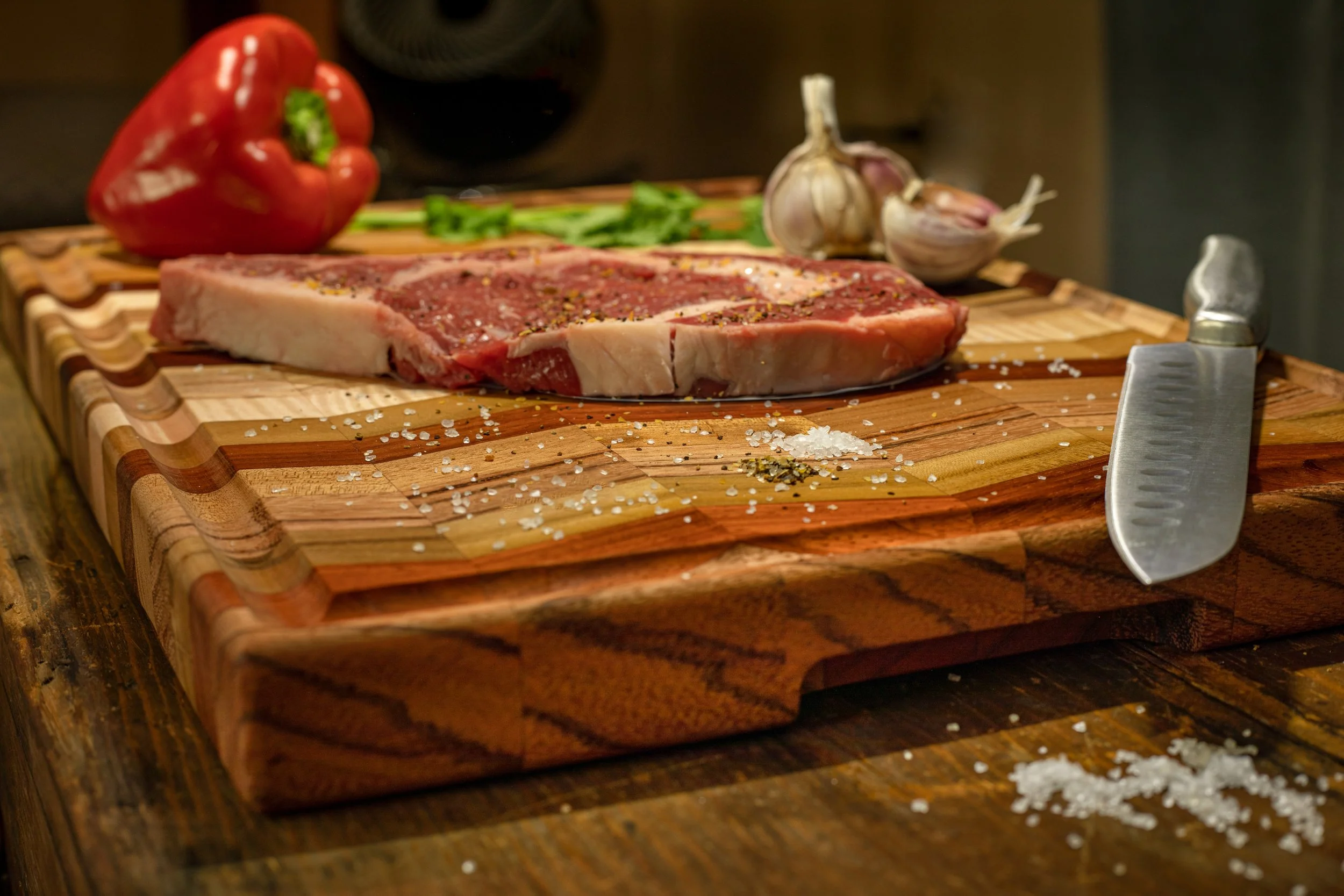
I sometimes make this point with a made-up example. Imagine Great-Grandmother Jones has had the same cutting board in her kitchen for fifty years. When the family gathers after she’s gone, everybody wants that old board.
Why? I can almost guarantee it isn’t because it still looks brand new.
It’s because it doesn’t.
It has knife marks. A lot of knife marks. It has wear. A lot of wear. Maybe the edges are a little softer than they used to be. You can tell just by looking at it that the board spent years in her kitchen doing exactly what it was made to do.
Those marks aren’t what ruined the board. They’re what gave it character.
That doesn’t mean a good cutting board shouldn’t be taken care of. Wash it properly, keep it conditioned, and don’t abuse it. But don’t be afraid to use it.
If I make you a cutting board and ten years from now it still looks exactly the way it did the day you got it, I’m not sure I’d consider that a compliment.
I’d much rather see some knife marks.
Stay safe, smile, and be kind to everyone you meet.
Will Salt